
Walk the protein aisle today and one trend is hard to miss: poultry is becoming the everyday protein of choice. As beef prices continue to climb and chicken prices remain comparatively stable, shoppers looking for value are shifting their baskets accordingly. For poultry processors, that creates both an opportunity and a challenge. Demand may be moving in your favor, but growth on paper only matters if the plant can scale output, protect quality, and stay profitable under pressure.
Why Poultry Is Surging
The shift toward poultry is being driven by a simple reality: consumers still want protein, but they are paying much closer attention to price. USDA retail pricing data shows beef has risen sharply in recent years while broiler chicken prices have remained far more stable. That widening gap makes chicken an easier everyday purchase for households trying to balance budget, convenience, and meal flexibility. As Figures 1 and 2 show, the spread between beef and poultry has widened materially in recent years. In practical terms, poultry is filling the space between affordability and versatility in a way beef increasingly cannot.
Price Trend Visuals and Sources
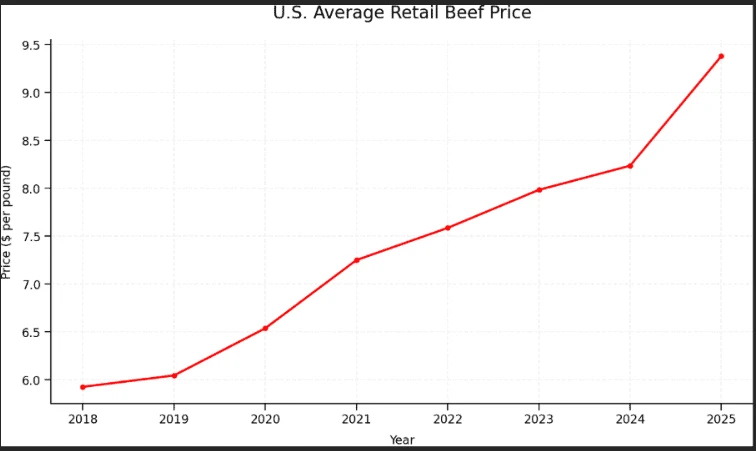
Figure 1. U.S. national average retail beef price trend (2018–2025), in dollars per pound. Beef costs rose markedly over the period, with especially sharp increases around 2020–2021 and again in 2025.
Source: USDA Economic Research Service retail meat price data
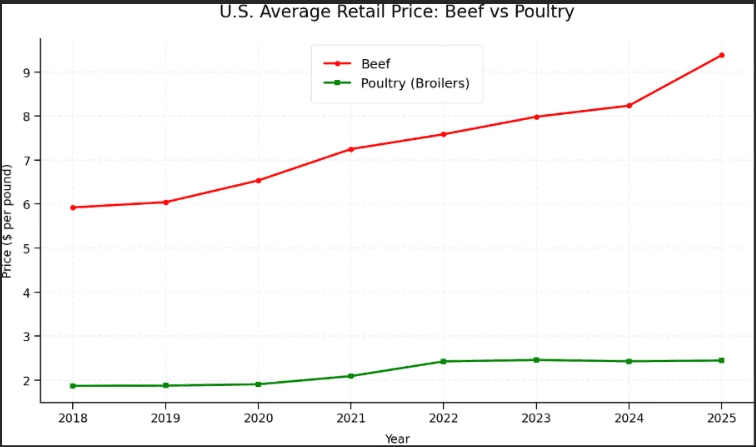
Figure 2. U.S. national average retail price of beef vs. poultry (2018–2025). Beef climbed steeply, while chicken remained comparatively stable, especially after 2022, widening the affordability gap for consumers.
Source: USDA Economic Research Service retail meat price data
Data note: These visuals summarize U.S. average retail pricing trends for beef and broiler chicken using USDA ERS retail price data covering 2018–2025. In the source analysis, beef values are described as all-fresh retail composite prices and poultry values as retail broiler composite prices.
The Operational Challenge Behind the Opportunity
Higher demand does not automatically translate into better margins. In many plants, increased volume exposes the operational weak points that were already there: labor shortages, equipment bottlenecks, inconsistent yields, and rising downtime costs. Poultry processing remains highly labor-intensive in key areas like deboning and packing, which is why more processors are investing in automation, smarter inspection systems, and tighter process control. As throughput rises, the cost of inconsistency rises with it.
Packaging Is Becoming a Competitive Advantage
As retailers and consumers push for convenience, shelf life, and better product presentation, packaging is doing more than containing product. Case-ready poultry programs, private label growth, and broader use of vacuum and modified-atmosphere packaging are raising the stakes for freshness, appearance, and shrink control. Better packaging supports labor efficiency at retail, extends distribution windows, and helps protect margins by reducing spoilage and markdowns. In a rising-demand environment, packaging decisions have a direct line to profitability.
Where Packers Supply Fits In
For poultry processors, the goal is not just to meet demand. It is to meet demand while protecting uptime, consistency, and cost per unit. That is where Packers Supply adds value. By providing OEM-compatible replacement parts that help keep critical equipment running reliably, Packers Supply supports the day-to-day performance improvements that matter most when volume is high. When demand is rising, even minor disruptions can become costly. The right parts strategy helps processors stay productive without sacrificing control.
Conclusion
Poultry demand is not just a short-term reaction to high beef prices. It reflects a broader shift toward value, convenience, and operationally efficient proteins. For processors, that means the opportunity is real, but so is the pressure to run smarter. The companies that improve uptime, protect yields, and stay ready to scale will be the ones best positioned to win as poultry continues to take share.